

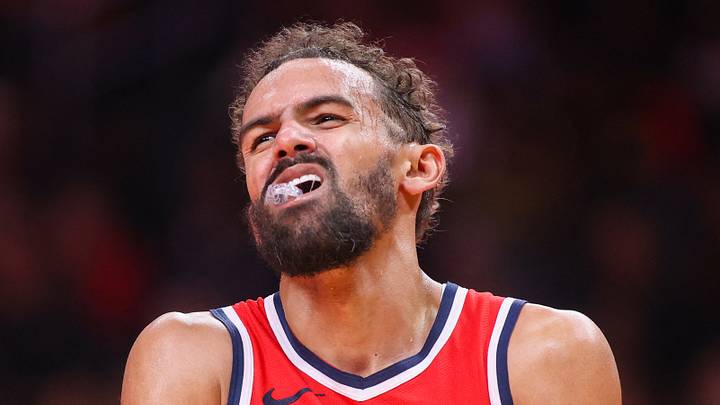
The thought when the Wizards in June gave four-time All-Star Trae Young a head-scratching $212 million extension was that, despite the big money, the Wizards would ensure they had a dependable floor general who could take over games with his scoring when need be, like he had done for seven years with the Atlanta Hawks. That hasn't been the case.
While his ability to get others involved through his playmaking is still there, through the first 10 games of the season, culminating in the latest performance in a blowout loss to the Oklahoma City Thunder, where Young mustered just four points on 1-for-6 shooting, relying on him as a dynamic scorer at this point may be a pipe dream.
Trae Young doesn’t look like a dependable enough high-volume scorer
It is only 10 games into an 82-game season, but currently, Young has yet to score 30 points or more in any game this season.
It's a far cry from a career 25-point-a-game guy who almost averaged 30 a game in just his second year in the association. Furthermore, if the season ended today, he would post career lows in points and assists per game in seasons where he’s played more than half of the games, which is every season except last year.
Also, he’s shooting just 39.8 percent, which would rank as a career low as well for a player who wasn’t the most efficient even in those four All-Star seasons. It’s a bit worrisome if you’re a Wizards fan or part of the Wizards brass.
This roster has the pieces to handle a new Trae Young role
After reaching the conference finals as the No.1 option with Atlanta, Young currently looks like he’s struggling to consistently fill that role with the recent absence of future Hall of Famer Anthony Davis from the lineup.
The good news is that this is where the emergence of third-year wing Kyshawn George and No.1 pick AJ Dybantsa can come in to alleviate that responsibility for Young. George may have already taken that leap, breaking out by averaging 18.5 points a night on much better efficiency, shooting 49.3 percent from the floor and 37.3 percent from three. Dybantsa is coming along nicely for a rookie by averaging 16 points a game, further certifying that the decision that Dawkins and Winger made to pick him first was a correct one.
In the meantime, Young will still be incredibly valuable for this group because of his truly special playmaking abilities, but the sub-20 point and sub-40 percent shooting from the floor nights stick out like a sore thumb for someone who was given max money.
 Add us as a preferred source on Google